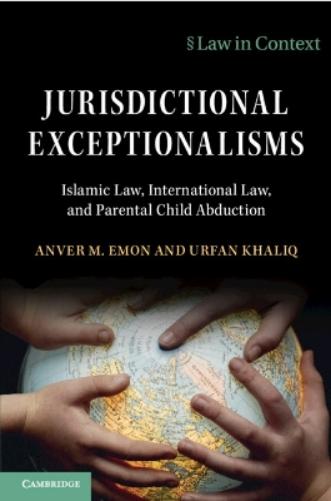
Jurisdictional Exceptionalisms
Islamic Law, International Law and Parental Child Abduction
Jurisdictional Exceptionalisms examines the legal issues associated with a parent's forced removal of their children to reside in another country following relationship dissolution or divorce. Through an analysis of Public and Private International Laws, and Islamic law - historical and as implemented in contemporary Muslim Family Law States - the authors uncover distinct legal lexicons that centre children's interests in premodern Islamic legal doctrines, modern State practice, and multilateral conventions on children. While legal advocates and policy makers pursue global solutions to parental child abduction, this volume identifies fundamental obstacles, including the absence of shared understandings of jurisdiction. By examining the relevant law and practice, the study exposes the polarised politics embedded in the technical legal rules on jurisdiction. Presenting a new, innovative method in comparative legal history, the book examines the beliefs, values, histories, doctrines, institutions and practices of legal systems presumed to be in conflict with one another.
Product Information
Product Information
Shipping & Returns
Shipping & Returns
Description
Islamic Law, International Law and Parental Child Abduction
Jurisdictional Exceptionalisms examines the legal issues associated with a parent's forced removal of their children to reside in another country following relationship dissolution or divorce. Through an analysis of Public and Private International Laws, and Islamic law - historical and as implemented in contemporary Muslim Family Law States - the authors uncover distinct legal lexicons that centre children's interests in premodern Islamic legal doctrines, modern State practice, and multilateral conventions on children. While legal advocates and policy makers pursue global solutions to parental child abduction, this volume identifies fundamental obstacles, including the absence of shared understandings of jurisdiction. By examining the relevant law and practice, the study exposes the polarised politics embedded in the technical legal rules on jurisdiction. Presenting a new, innovative method in comparative legal history, the book examines the beliefs, values, histories, doctrines, institutions and practices of legal systems presumed to be in conflict with one another.