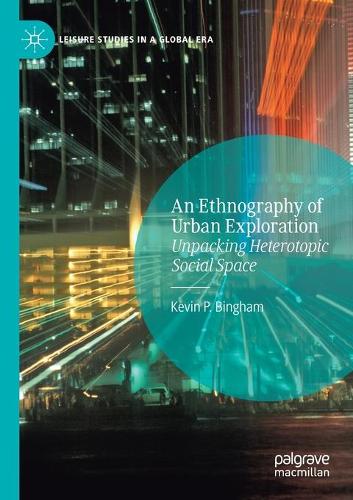
An Ethnography of Urban Exploration
Unpacking Heterotopic Social Space This book analyses a unique leisure world that has been built around a newly emerging phenomenon known as urban exploration; the art of exploring human-made environments which are generally abandoned or hidden from sight of the public eye. Drawing on Michel Foucault’s concept of heterotopia, Bingham provides a detailed and critical investigation of urban exploration as a form of leisure that is about the coming together of drifting performers who, in their celebration of ‘rebellion’ and ‘deviance’, are determined to find a sense of meaning and belonging. The research considers the influence of consumer capitalism on urban explorers, and the wider social, economic and political context that shapes ideas of belonging and identity in the twenty-first century. By doing this, the book analyses urban exploration as an activity that has emerged in a time when human ideas about culture, individuality and community have transformed, and ‘solid’ modernity is gradually disintegrating around us.
Original: $237.35
-65%$237.35
$83.07Product Information
Product Information
Shipping & Returns
Shipping & Returns
Description
Unpacking Heterotopic Social Space This book analyses a unique leisure world that has been built around a newly emerging phenomenon known as urban exploration; the art of exploring human-made environments which are generally abandoned or hidden from sight of the public eye. Drawing on Michel Foucault’s concept of heterotopia, Bingham provides a detailed and critical investigation of urban exploration as a form of leisure that is about the coming together of drifting performers who, in their celebration of ‘rebellion’ and ‘deviance’, are determined to find a sense of meaning and belonging. The research considers the influence of consumer capitalism on urban explorers, and the wider social, economic and political context that shapes ideas of belonging and identity in the twenty-first century. By doing this, the book analyses urban exploration as an activity that has emerged in a time when human ideas about culture, individuality and community have transformed, and ‘solid’ modernity is gradually disintegrating around us.