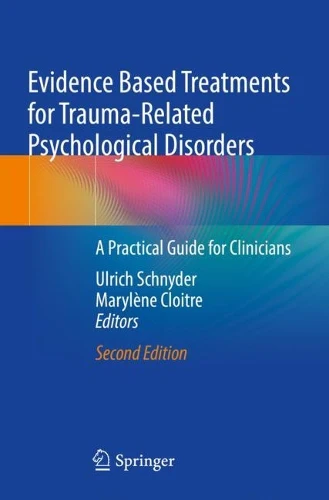
Evidence Based Treatments for Trauma-Related Psychological Disorders
A Practical Guide for Clinicians The second, completely updated edition of this book offers an evidence based guide for clinical psychologists, psychiatrists, psychotherapists and other clinicians working with trauma survivors in various settings. It provides easily digestible, up-to-date information on the basic principles of traumatic stress research and practice, including psychological and sociological theories as well as epidemiological, psychopathological, and neurobiological findings. However, as therapists are primarily interested in how to best treat their traumatized patients, the core focus of the book is on evidence based psychological treatments for trauma-related mental disorders. The full range of trauma and stress related disorders is covered, including Acute Stress Reaction, Complex PTSD and Prolonged Grief Disorder, reflecting important anticipated developments in diagnostic classification. Each of the treatment chapters begins with a short summary of the theoretical underpinnings of the approach,presents a case illustrating the treatment protocol, addresses special challenges typically encountered in implementing this treatment, and ends with an overview of related outcomes and other research findings. Additional chapters are devoted to the treatment of comorbidities, special populations and special treatment modalities and to pharmacological treatments for trauma-related disorders. A novel addition is the chapter on Innovative interventions to increase global mental health. The book concludes by addressing the fundamental question of how to treat whom, and when.
Each of the treatment chapters begins with a short summary of the theoretical underpinnings of the approach,presents a case illustrating the treatment protocol, addresses special challenges typically encountered in implementing this treatment, and ends with an overview of related outcomes and other research findings.
Original: $258.93
-65%$258.93
$90.63Product Information
Product Information
Shipping & Returns
Shipping & Returns
Description
A Practical Guide for Clinicians The second, completely updated edition of this book offers an evidence based guide for clinical psychologists, psychiatrists, psychotherapists and other clinicians working with trauma survivors in various settings. It provides easily digestible, up-to-date information on the basic principles of traumatic stress research and practice, including psychological and sociological theories as well as epidemiological, psychopathological, and neurobiological findings. However, as therapists are primarily interested in how to best treat their traumatized patients, the core focus of the book is on evidence based psychological treatments for trauma-related mental disorders. The full range of trauma and stress related disorders is covered, including Acute Stress Reaction, Complex PTSD and Prolonged Grief Disorder, reflecting important anticipated developments in diagnostic classification. Each of the treatment chapters begins with a short summary of the theoretical underpinnings of the approach,presents a case illustrating the treatment protocol, addresses special challenges typically encountered in implementing this treatment, and ends with an overview of related outcomes and other research findings. Additional chapters are devoted to the treatment of comorbidities, special populations and special treatment modalities and to pharmacological treatments for trauma-related disorders. A novel addition is the chapter on Innovative interventions to increase global mental health. The book concludes by addressing the fundamental question of how to treat whom, and when.
Each of the treatment chapters begins with a short summary of the theoretical underpinnings of the approach,presents a case illustrating the treatment protocol, addresses special challenges typically encountered in implementing this treatment, and ends with an overview of related outcomes and other research findings.